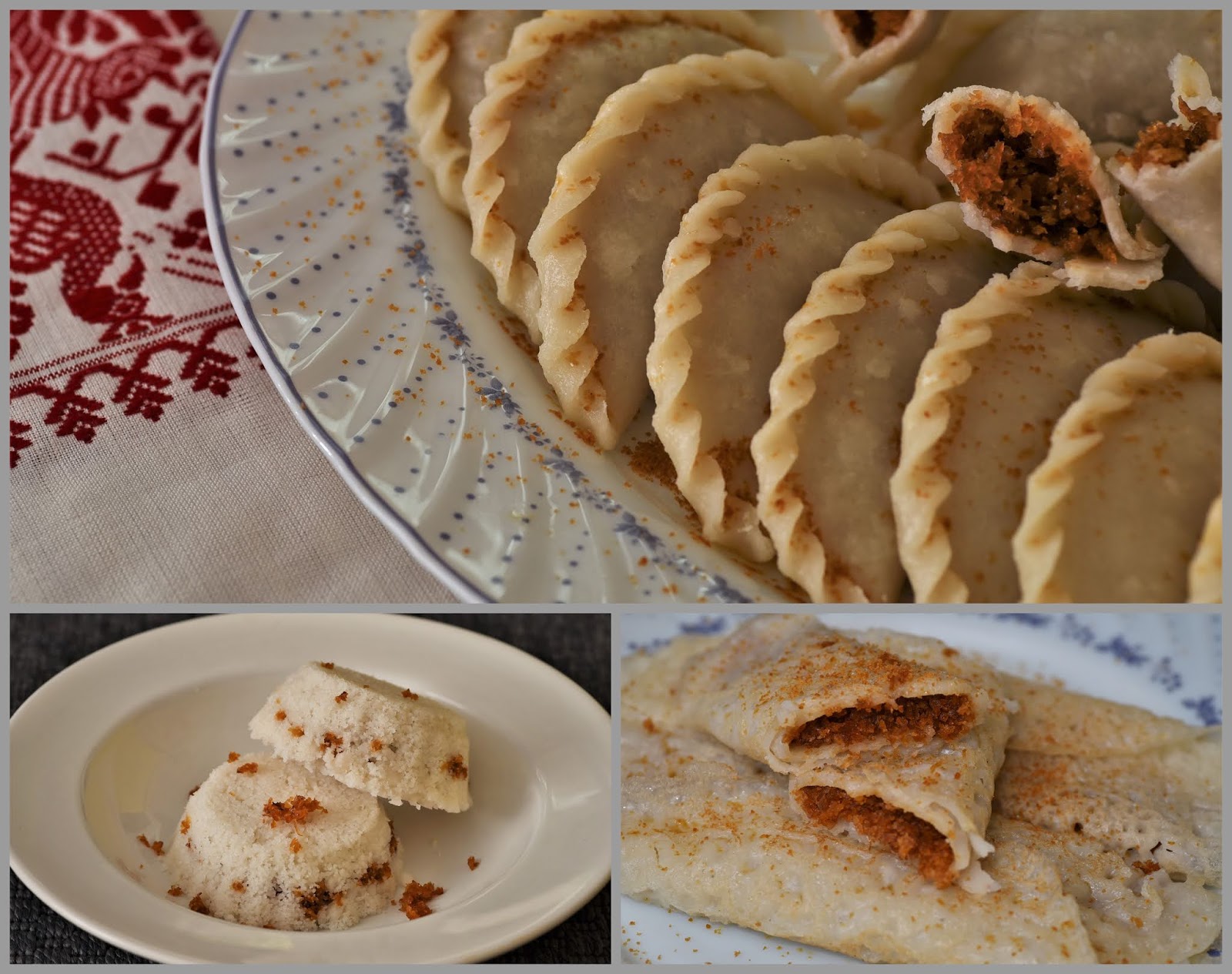
 Narikol Pitha (Sweet Rice Dumpling): Ingredients-
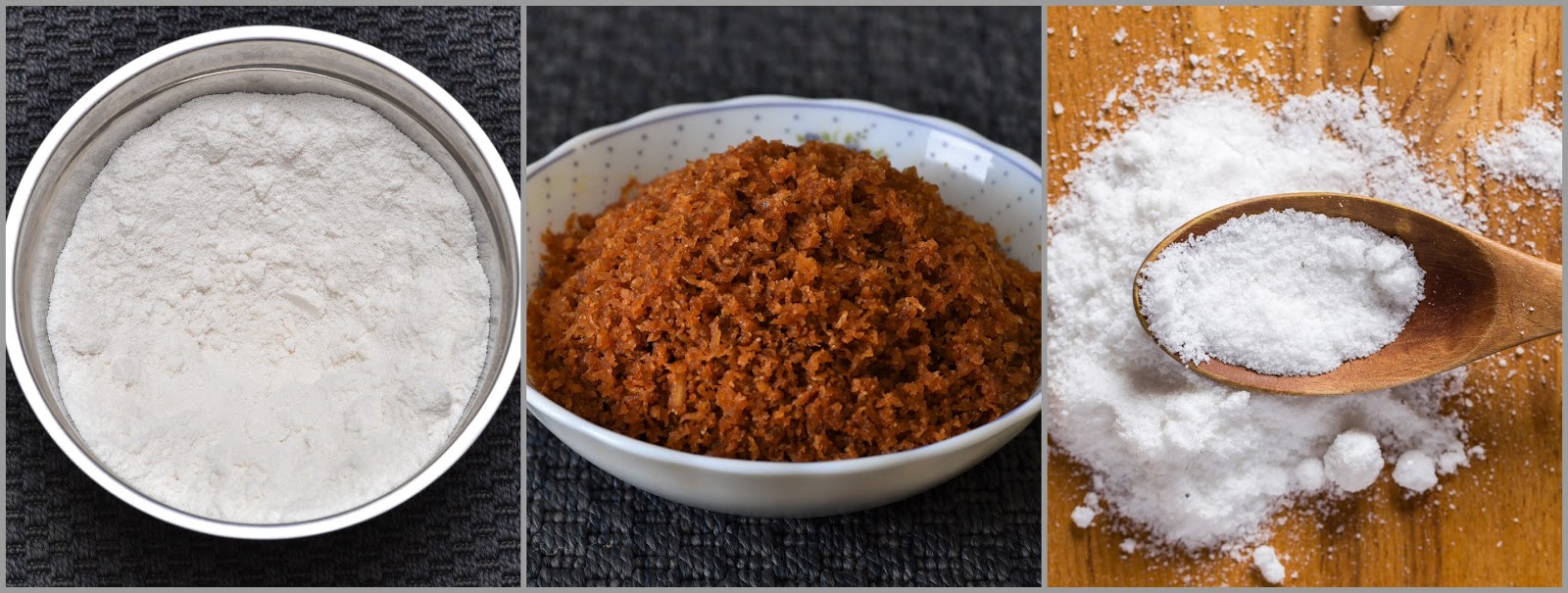
Rice flour: I used the remaining flour, about 4 cups
Coconut+Jaggery mix: for filling
Salt: 1 pinch
Water: To make the dough (approx 1 cup)
Step 1: Heat water in a pan to make the dough. Add a pinch of salt into it. Once the water is boiled lower the flame and add the rice flour and stir with a spatula, mix it well to make the dough. The process is a bit tricky, make sure you do it properly. After a minute turn the heat off and let it cool. Once it comes to normal temperature knead the dough with hand to make chapatti. If needed use more rice flour (or Maida) while kneading to avoid sticking.
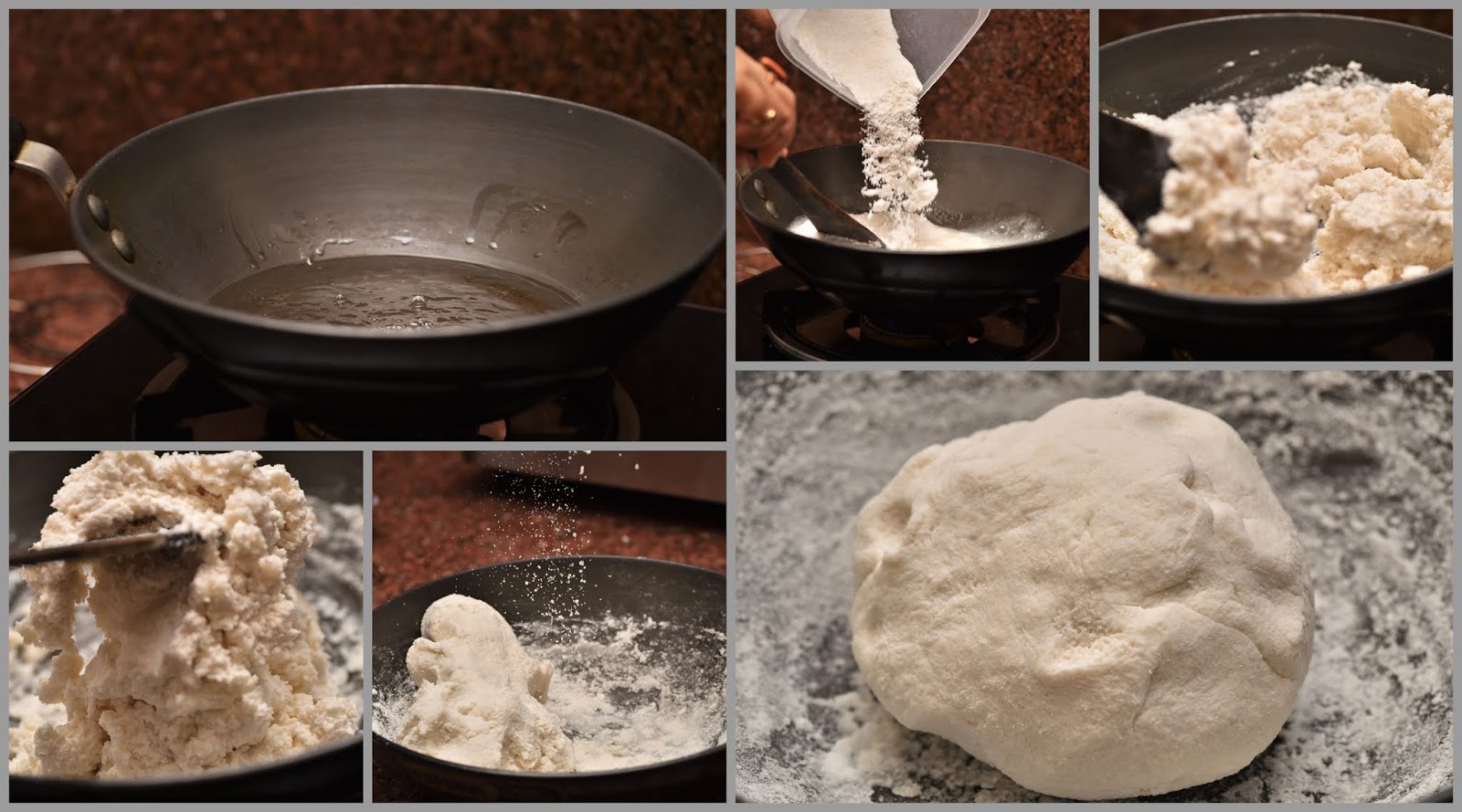
(Make sure you add the correct amount of water or else the dough might get soggy.)
Step 2: Heat water in a steamer ( or a pot with a steamer) and bring it to boil. Keep it in medium flame. Place a clean muslin cloth on the steamer and cover the lid. An electric rice cooker with a steamer also can be used.
Step 3: Once the dough is ready divide it into small balls for chapatti. Make the chapattis little bigger than the regular size. Take a steel glass or a round shape mould and cut the chapatti to take out a smaller portion from it. See the pictures for reference. Fill the smaller chapatti with the coconut and jaggery mix and close the edges. To give it a nice shape, gently press the edges with your fingertip and fold it. If you find it complicated use a fork to press the edges to close it.


Well, this not the end of the Pitha series. As I mentioned earlier there is a wide variety of Pithas in Assam and each one is made in a different way. Though some common Pithas are made in other Indian states such as West Bengal, Bihar, Odisha and other parts of Northeast India, there are some varieties which are exclusively made only in the regions of Assam. So, keep following and stay connected as there will more authentic recipes on Pithas in future.
 THISTLE AND MINT
The dumplings look so perfect..!!
LikeLike