 Ingredients:
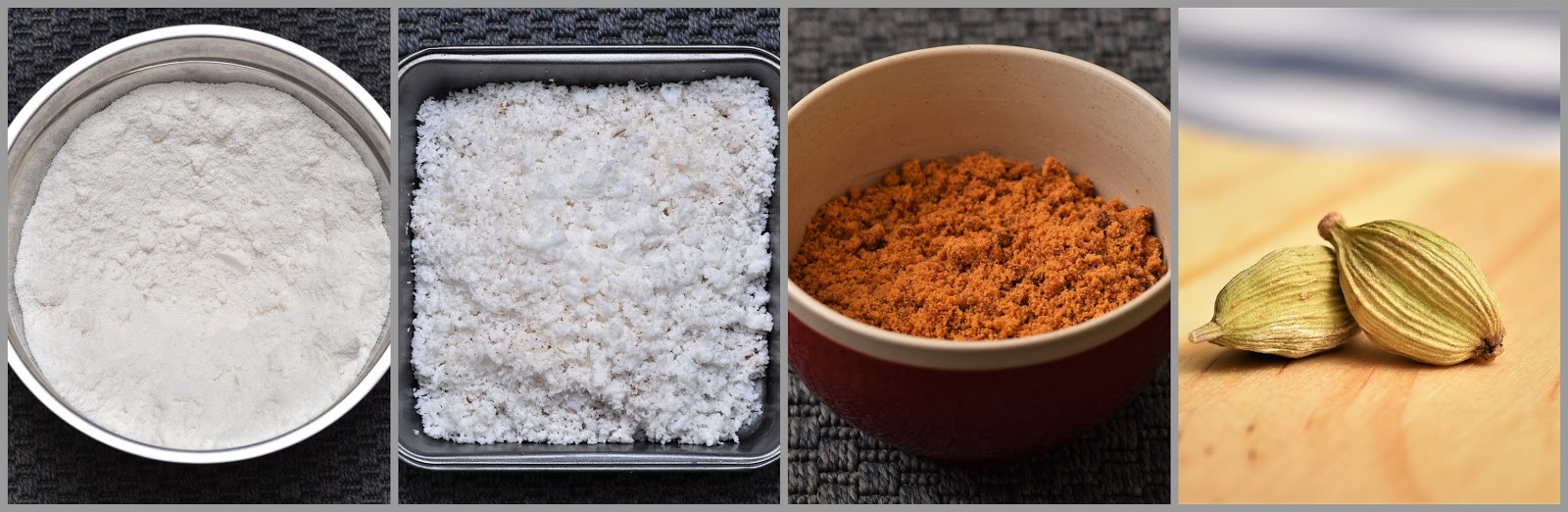
Rice flour: 1 kg of rice)
Coconut: 2 (grated)
Jaggery (grated/powder): 1 and a half cups
Cardamom powder: 1 pinch
Salt: 1 pinch
Making the rice flour: Soak around 1 kg rice (regular white rice) for a couple of hours in water. Drain the water and grind it in a mixer grinder into a fine flour. Use a sieve to extract the finest flour and set aside.
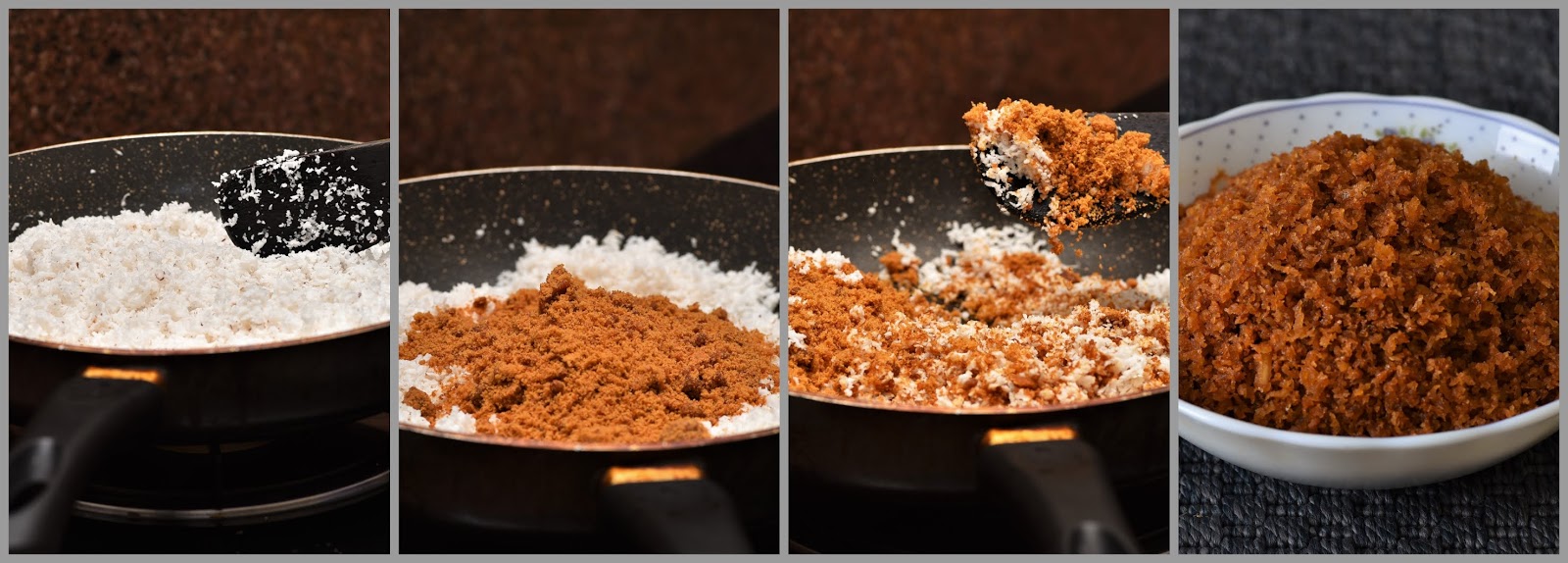
Making the filling: Heat a pan and add the grated coconut. Sprinkle a pinch of cardamom powder for fragrance. The coconut will gradually release its oil, keep stirring it in medium heat. Add the jaggery powder and mix it well with the coconut. Keep stirring for 5-8 minutes, or until the moisture is completely gone and it is perfectly roasted. Once done turn off the heat and keep it aside.
(The filling can also be made with roasted sesame seeds and jaggery. For this, grind roasted sesame seeds roughly, add jaggery powder and mix it well.)
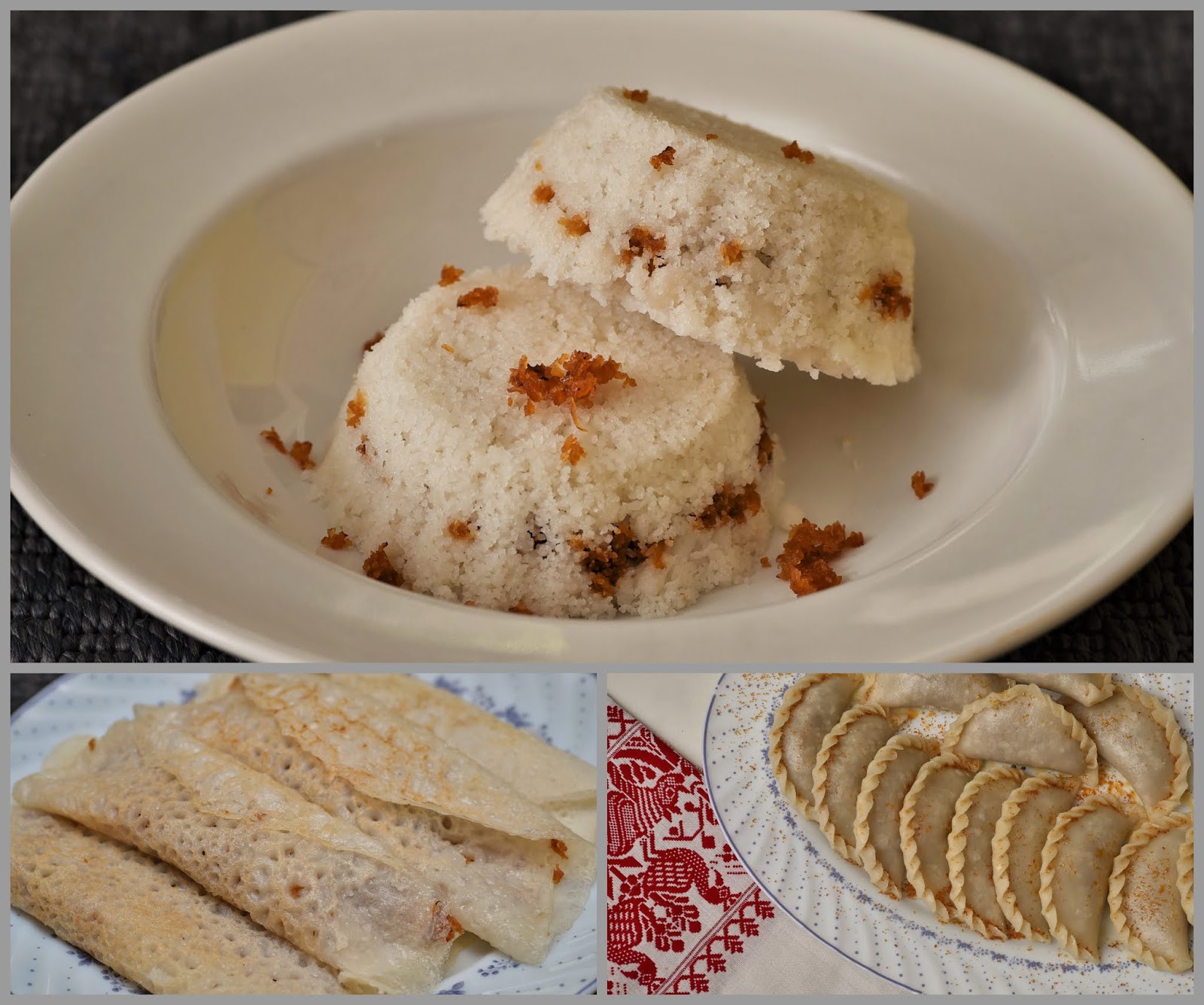
1. Tekeli or Keteli Pitha (Rice Cake)
In Assamese ‘Keteli’ means a Kettle (the traditional Indian aluminium kettle). Traditionally it is made in the steam of the Kettle placing the rice cake wrapped in a muslin cloth into the lid of the Kettle. Sometimes it is also made in an earthen pot (Tekeli in Assamese) that comes with a steamer. But these days everyone might not have the aluminium kettle or an earthen pot available in their houses. So here is how it can be made the modern way.
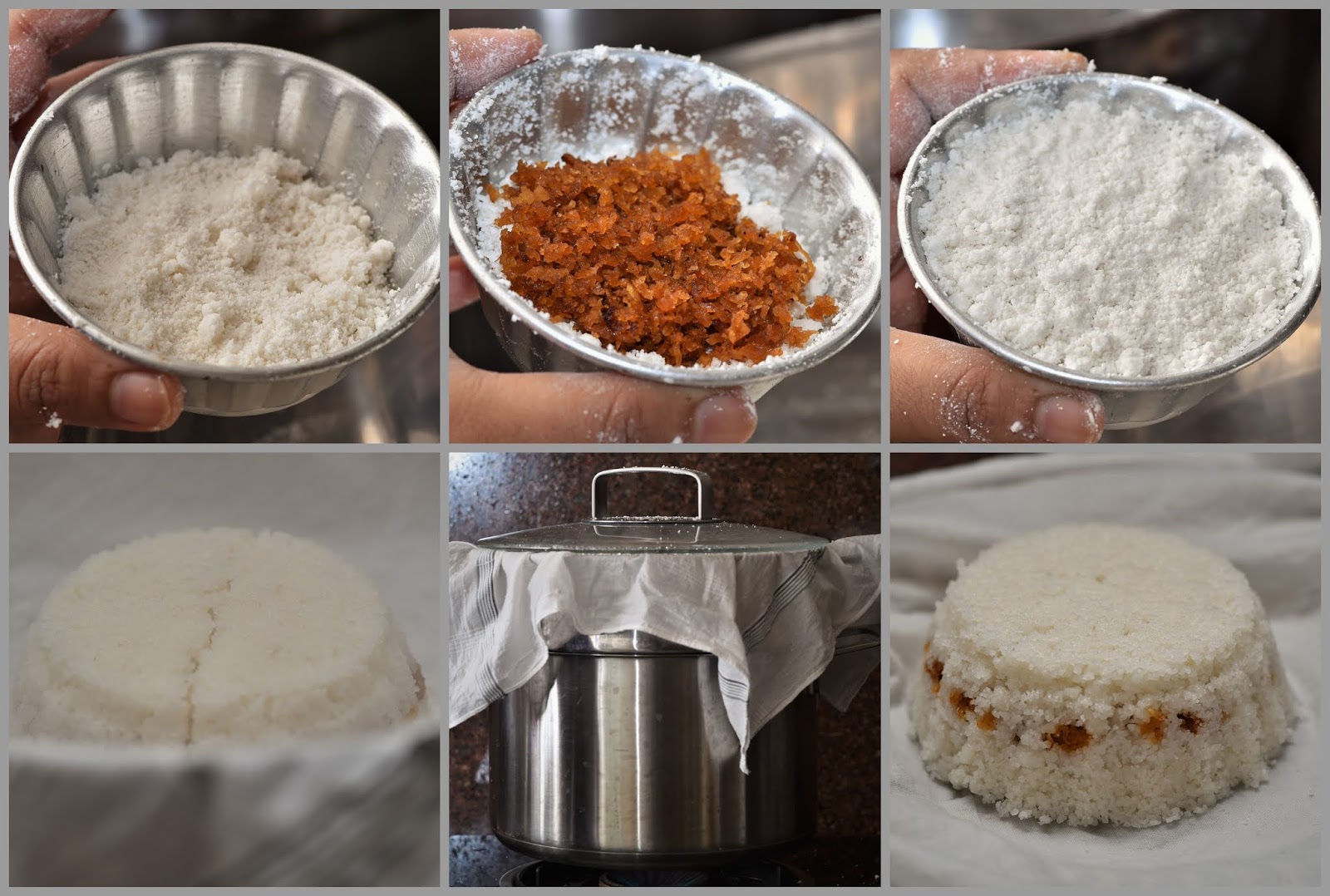
Step 1: Heat water in a pot with steamer and bring it to boil. Keep it in medium flame. Place a clean muslin cloth on the steamer and cover the lid. It can also be made in an Idly maker or electric rice cooker with a steamer.
Step 2: I had taken half of the rice flour for this preparation, that would be around four cups. Take the rice flour into a bowl and add a pinch of salt. Mix it well. Take a cup of water and sprinkle a little over the flour and mix it using your hand. Break the lumps while mixing. Don’t put the entire water at a time. Take a little in your palm and sprinkle it. This is to add a little moisture to the flour.
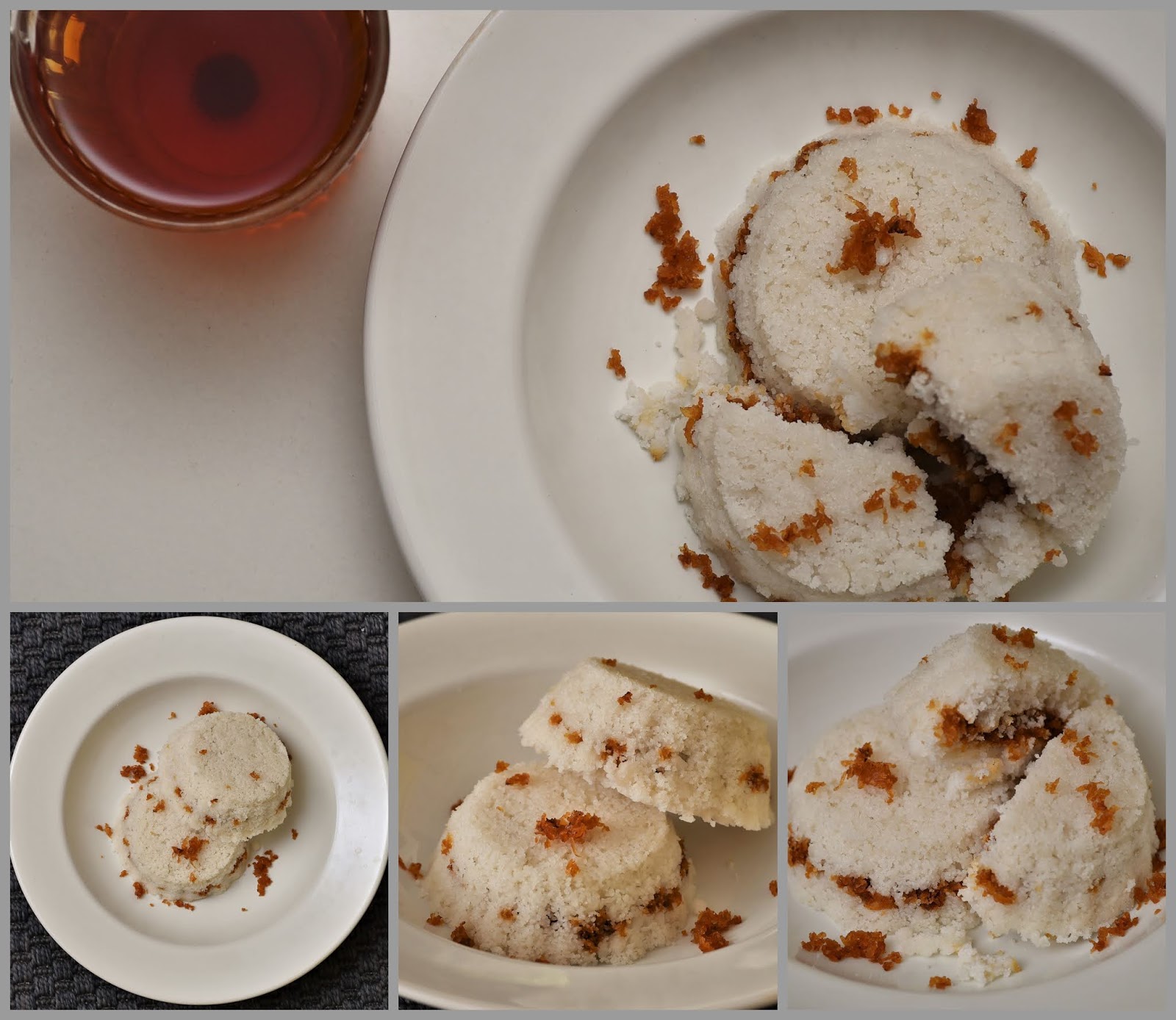
Step 3: Next take a small bowl or a muffin baking mould. Fill 1/3rd of it with a layer of flour, then fill the next layer with coconut and jaggery mixture covering 2/3rd of it and finally fill the remaining with another layer of the flour. Press it gently to set it, flip the mould upside down in the steamer, and slowly take the mould out. Follow the steps shown in the picture for more clarity. A big steamer will accommodate more rice cakes. Cover the lid and steam it for 5 minutes. Take it out gently with a spatula once done.
Follow the same process to make the remaining. Sprinkle more water in the flour if the moisture is gone. Serve immediately with a hot cup of tea.
Stay connected for the next item called Patishapta Pitha. Get the essential utensils to make delicious Pithas.
 THISTLE AND MINT